
The Secret Life of a Cricket Ball: From Factory to First Boundary

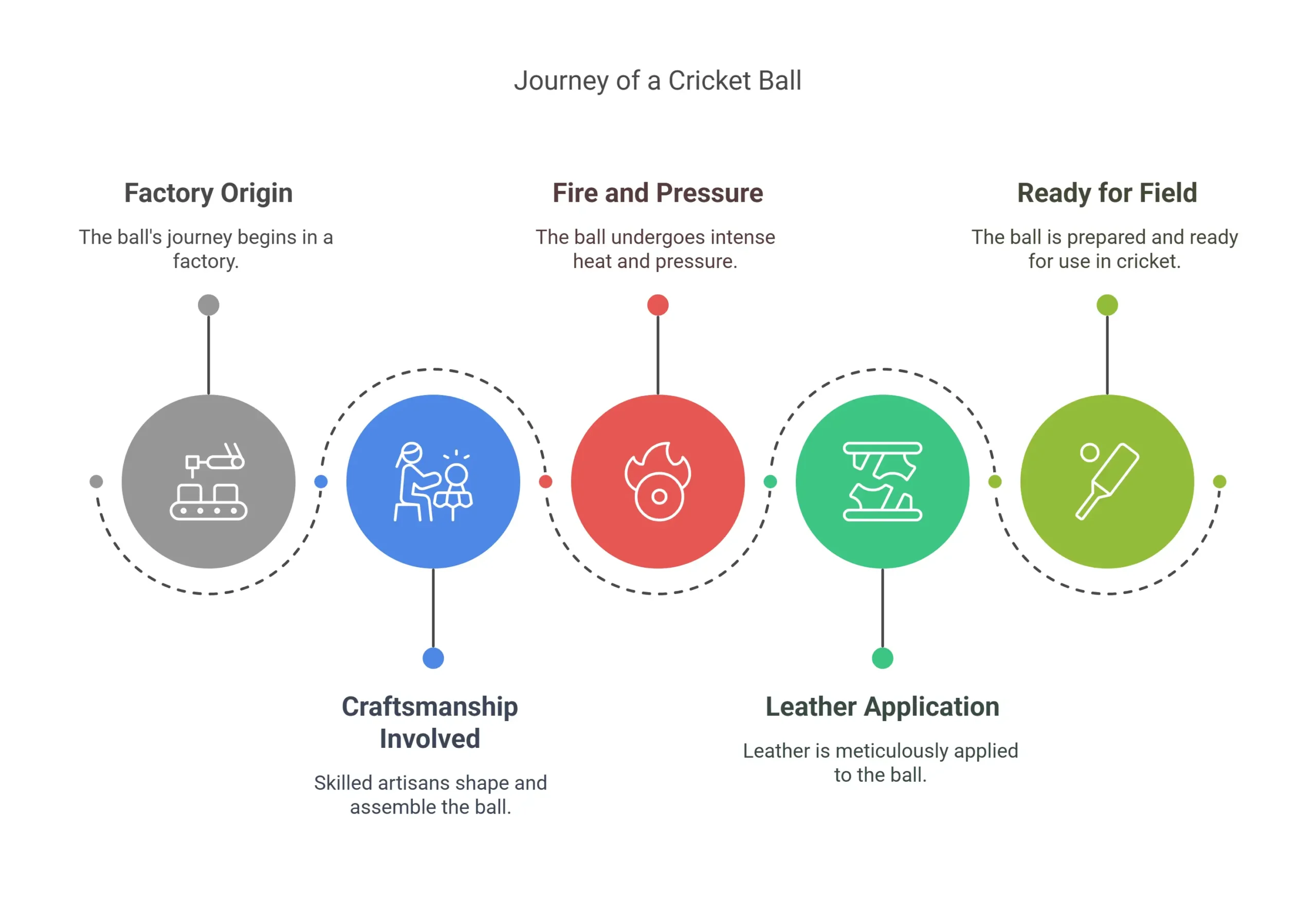
Have you ever wondered what a cricket ball goes through before it reaches the pitch? Spoiler: it’s not just sitting pretty in a box!
In today’s Cricket Talk, we’re taking you behind the scenes — into the journey of a cricket ball from the factory to the field. It’s a tale of fire, pressure, craftsmanship… and leather.
🔨 Step 1: The Birth of the Core
At the heart of every cricket ball is a cork and rubber core. This small, rock-solid sphere is what gives the ball its bounce and power.
Fun fact: the core is pressed under tons of pressure to make sure it stays strong even after 80 overs!
🧵 Step 2: Wrapping It Up – With Yarn and Precision
The core is wrapped with layers of tightly wound wool or cotton yarn. This gives the ball its round shape and perfect weight.
It takes skill to get this right — too tight, and the ball becomes too hard. Too loose, and it’s a bowler’s nightmare!
🐄 Step 3: The Leather Jacket
Next, the ball is covered in genuine leather, dyed deep red or white depending on the format. The leather is carefully shaped into four panels.
Here’s the cool part: these panels are stitched together by hand, using strong linen thread. The stitching forms the iconic seam — a fast bowler’s best friend!
🔥 Step 4: Polishing and Pressing
The ball is then polished, waxed, and pressed into shape. This gives it that beautiful shine — and makes it last longer during intense play.
High-quality balls are tested for balance, bounce, weight, and seam strength before they ever meet a bat!
🎯 From Factory to Fame
Once ready, cricket balls are packed and shipped to matches around the world. Some go to schoolyards. Some to dusty nets. And some? Straight into a World Cup match where legends are made.
That’s right — the ball you hold today might be tomorrow’s match-winner.
🧠 Fun Fact:
Each red leather ball used in a Test match can cost over $100, and is changed only if it’s seriously damaged — or when it’s bowled into a river!
🏆 Final Words: It’s Not Just a Ball. It’s a Legacy.
Next time you hold a cricket ball, remember: you’re holding hours of craftsmanship, tradition, and science. Whether it ends up on a grassy field or flying over the boundary, it has one job — to bring the game alive.